


Pauleson Utsu
Have you ever wondered why alcohol-making companies never use drunkards, their most loyal consumers, as brand ambassadors? It is because the moment the food is finished, the plate becomes “a dirty plate.” Think about this for a moment.
There is a particular kind of silence that settles over a house where addiction lives. It is not the silence of peace. It is the silence of children who have learned not to ask questions, of spouses who have stopped waiting up, of a family holding its breath, waiting for the next storm.
We often speak of addiction as though it belongs to one person, the one who drinks, the one who uses. But addiction rarely stays contained. It seeps into walls. It changes the rhythm of a household. It rewrites the roles everyone plays, whether they consented to the part or not.
Consider the child who becomes a parent before their time, waking younger siblings for school because Mum or Dad cannot. Consider the spouse who becomes a manager of crises, forever calculating: Is it safe to leave the children today? Will there be money for food, or will it disappear into a bottle by nightfall? Consider the elderly parent, watching their grown child unravel, grieving someone who is still, technically, alive.
This is the ripple effect; the unseen casualties of substance abuse. They don’t make the headlines. They don’t get counted in statistics about addiction “recovery rates.” But they carry the weight all the same: in anxiety that follows them into adulthood, in trust that takes years to rebuild, in a nagging fear that safety is always temporary.
What makes this harder is the shame that wraps around these families like a second skin. Communities often respond to addiction with judgment rather than compassion, as though the family somehow failed to prevent it, as though love alone should have been enough to stop a disease that specializes in defeating love. So, families hide. They cover for the person who is struggling. They rehearse explanations for missed events and broken promises. And in hiding, they lose the one thing that could actually help them: support.
We must begin to see addiction for what it truly is, not a moral failing, but a crisis that requires a community response. Families affected by substance abuse do not need more silence or more shame. They need spaces where they can speak honestly about what is happening at home without fear of judgment. They need access to counseling, support groups, and practical resources. And crucially, children in these homes need adults outside the family who notice, who ask, who make it safe to tell the truth.
Healing from addiction’s ripple effect is possible, but it rarely happens in isolation. It happens when communities stop looking away.
If your family, or one you know, is living in the shadow of addiction, know this: seeking help is not a betrayal of the person you love. It is often the first act of love strong enough to interrupt the pattern. The bottle may have broken something. But broken things, given the right care, can still be made whole.
Hi there,
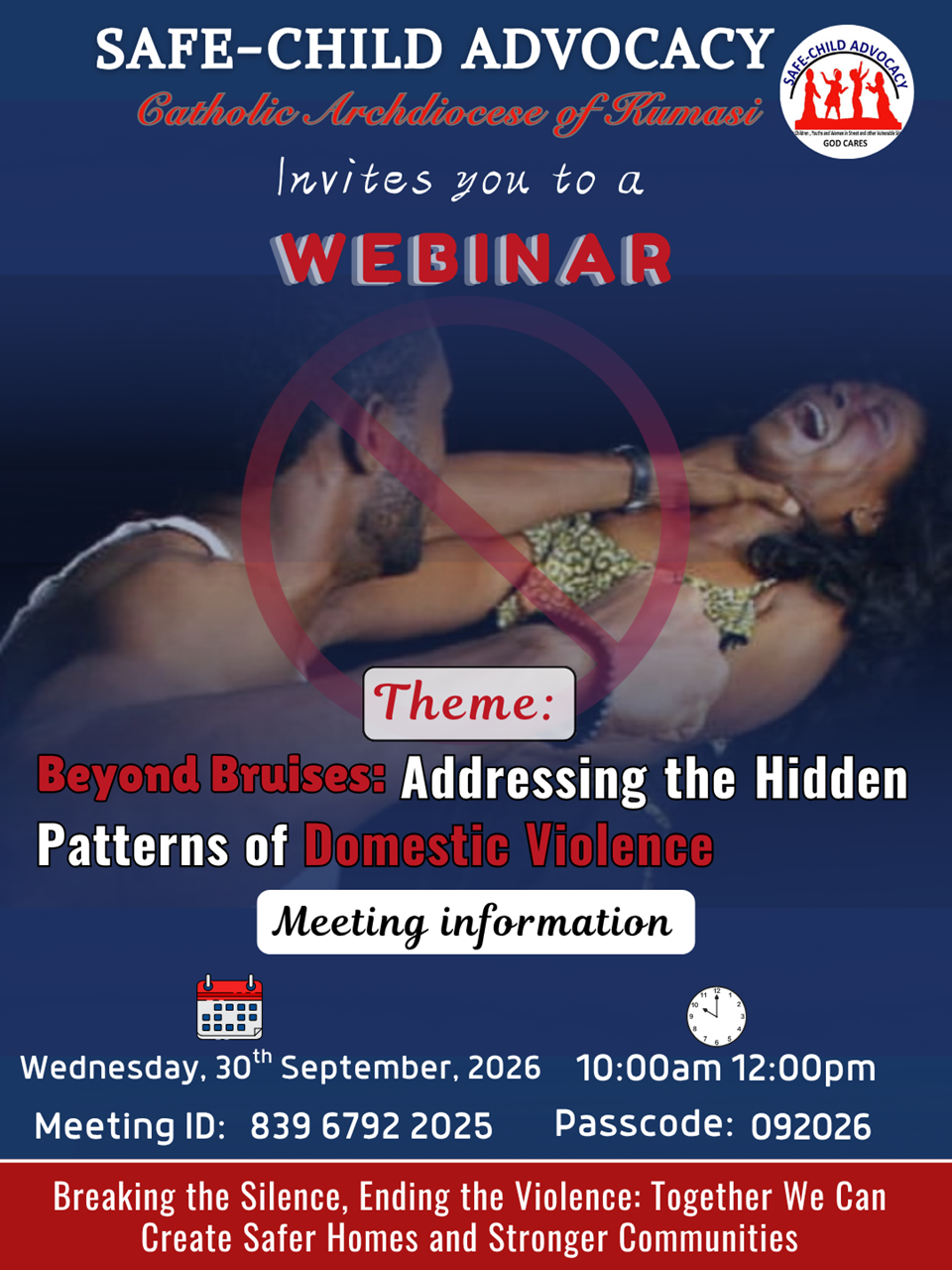
SCA warmly invites you to join our upcoming webinar aimed at raising awareness and preventing domestic violence.
When: Sep 30, 2026 10:00 PM Greenwich Mean Time
Register in advance for this meeting:
https://us02web.zoom.us/meeting/register/6q9f1DqpS92mwrZT90msZQ
 After registering, you will receive a confirmation email containing information about joining the meeting.


