


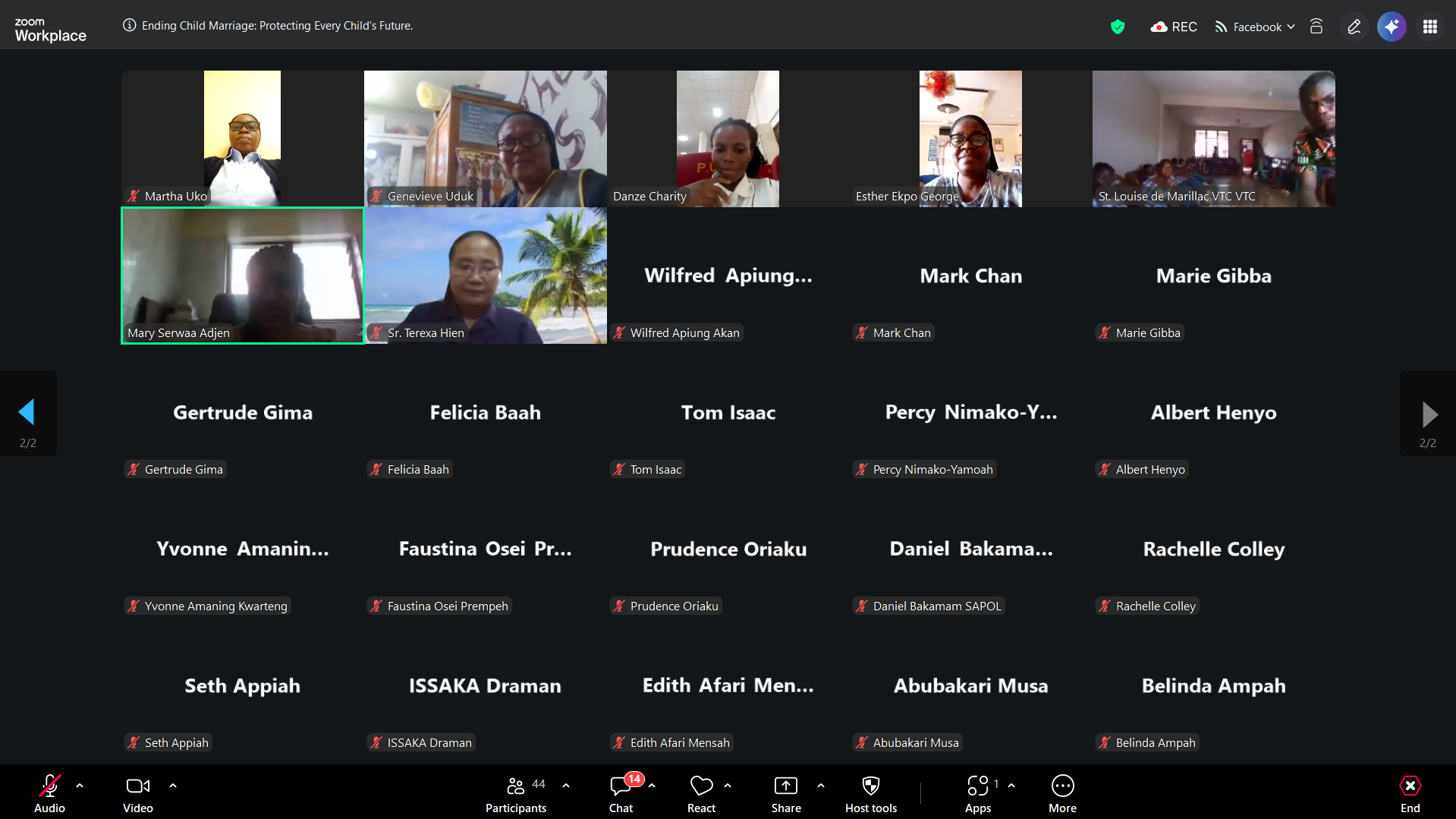
Safe-Child Advocacy, together with our key partners, hosted a virtual meeting on the theme “Ending Child Marriage: Protecting Every Child’s Future.” The conversation was part of ongoing efforts to shine a light on the suffering many children—especially those in vulnerable situations—continue to endure. It also served as a build-up to the International Day for Street Children, marked every year on April 12th. The meeting attracted over 248 registrants, with more than 108 people joining the live session.
The event was moderated by Mr. Akwasi Prempeh, Human Resource Manager at Safe-Child Advocacy, and hosted by Sr. Olivia Umoh, DC, the organization’s Director. A rich panel of speakers joined the conversation, including Mr. Alhassan Ziblim (Executive Director, CEDEPA), Mr. Tijani Mahmoud (Programs Manager, Muslim Family and Counselling Services), Barrister Winnifred Betore (Legal Practitioner), Dr. Yaa Adoma Odame (Senior Paediatrician Specialist, Hope Exchange Medical Centre), and Mrs. Mary Serwaa Adjen (Director of Social Welfare and Community Development, Oforikrom Municipal Assembly).
 The session began with Mr. Tijani Mahmoud, who unpacked the community-level factors driving child marriage in Ghana. He spoke about how cultural expectations, poverty, and limited educational opportunities continue to push girls into early unions. He emphasized the need for community education, stronger involvement of traditional leaders, empowerment initiatives for girls and their families, mentorship programs, safe spaces for young people, and well-functioning reporting systems. For him, collaboration among NGOs, government actors, and local communities is essential.
Mr. Alhassan Ziblim expanded the discussion by reflecting on deeply rooted cultural practices, particularly in northern Ghana, where early marriage is sometimes normalized or viewed as a path to family stability. He called for intentional community dialogue, long-term engagement, and persistent awareness campaigns to help shift these norms.
Offering a legal lens, Barrister Winnifred Betore outlined the laws and international treaties that clearly prohibit child marriage. She also highlighted critical gaps—limited enforcement, clashing cultural beliefs, and low awareness of rights, especially in remote communities. She stressed the need for stronger penalties, better resourcing of enforcement agencies, and broader public education to ensure children understand and can claim their rights.
Dr. Yaa Adoma Odame brought in the medical perspective, explaining the serious health risks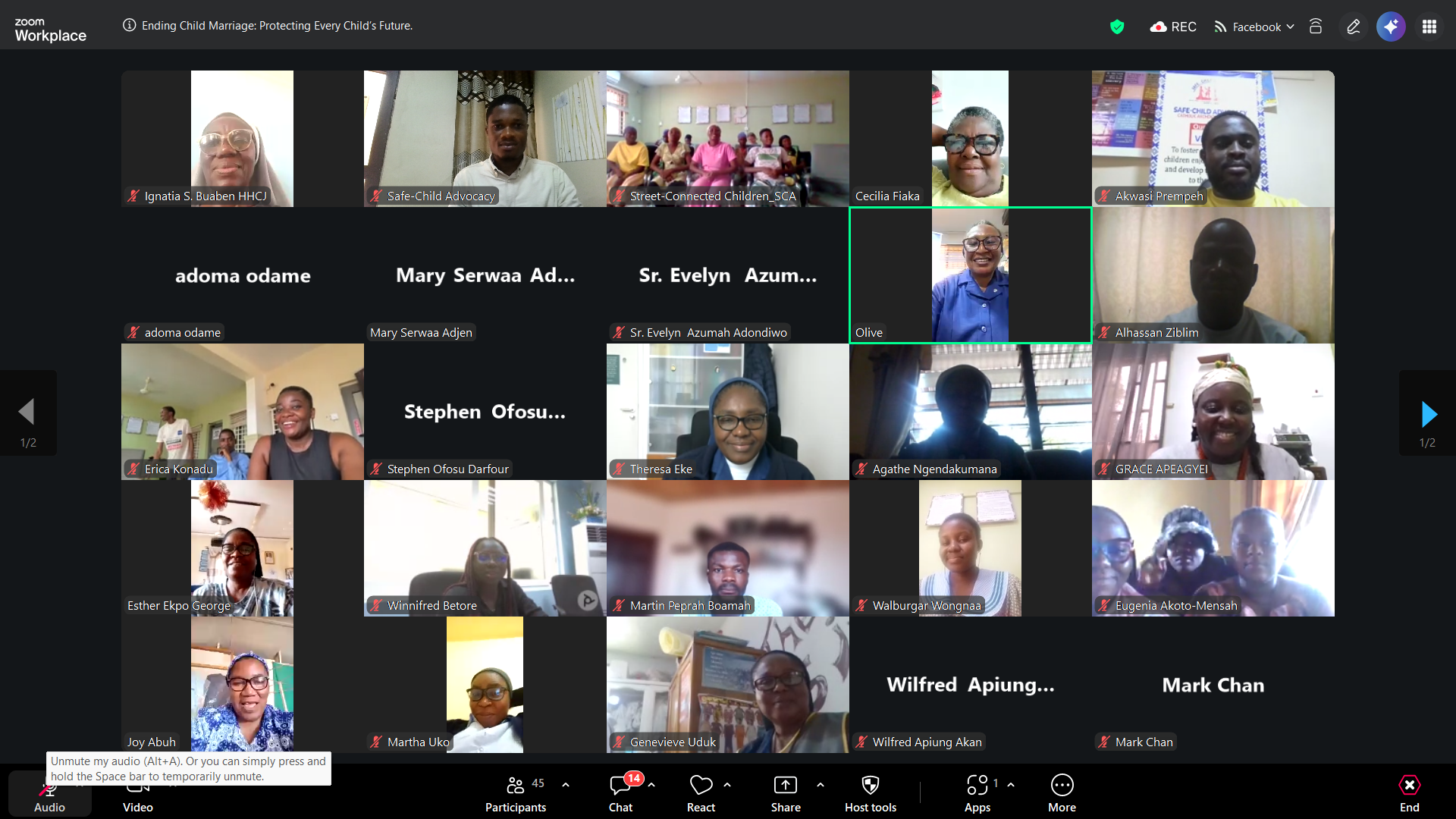 associated with child marriage. She spoke about the dangers of early pregnancy, complications like fistula, higher maternal and newborn mortality rates, along with long-term psychological and intergenerational impacts. Her message underscored just how urgent it is to keep girls safe from early marriage.
Closing the panel presentations, Mrs. Mary Serwaa Adjen shared Ghana’s national efforts to combat child marriage. She referenced global figures showing that more than 640 million women were married as children, while Ghana’s own data reveals that one in five girls is married before age 18. She highlighted the UNICEF–UNFPA global program and Ghana’s 2017–2027 National Strategic Framework, which focuses on improving laws, strengthening community advocacy, expanding education access, and supporting economic empowerment. Although Ghana has strong policies on paper, she emphasized that real progress depends on enforcement and community-driven action.
During the open discussion, participants raised concerns such as parental pressure on pregnant teens to marry, confusion between legal standards and cultural expectations, children’s hesitation to accept support, and broader weaknesses in child welfare and justice systems. There was clear agreement that ending child marriage will require collective effort—from families and professionals to government agencies and community leaders.
The meeting wrapped up with a renewed call for stronger awareness campaigns, firmer enforcement of child protection laws, and wider implementation of proven community interventions. Participants were encouraged to share insights from the discussion with their networks and keep sending in questions for follow-up engagement.
Looking ahead, the priorities include: ongoing community education led by Safe-Child Advocacy; stronger collaboration across NGOs and government departments; enhanced enforcement by social welfare and child protection officers; better community-level reporting structures; more empowerment opportunities for girls; stronger justice systems; and expanded community dialogues and leadership engagement. Stakeholders also stressed the importance of improving data sharing, reviewing legal frameworks, and increasing funding for frontline workers.
In the end, the virtual meeting reaffirmed a shared commitment: to work together for a future where every child is protected, empowered, and given the chance to grow free from harmful practices like child marriage.
You can watch the full recording here: Click here


